
bACKGROUND
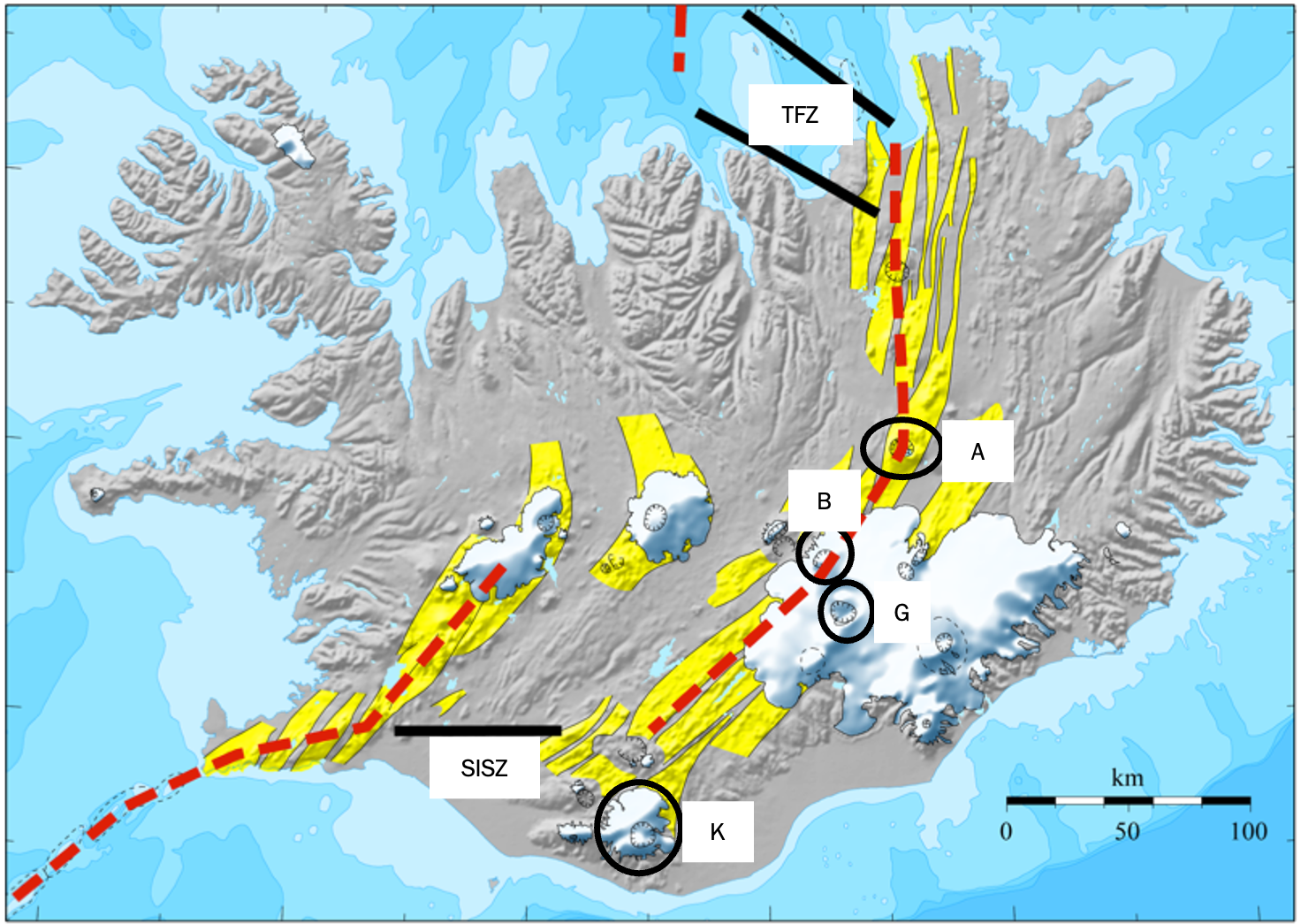
Glaciers in Iceland have been retreating since 1890. Climate projections suggest that most may vanish within a few hundred years. This retreat changes the stress field deep within the mantle and crust, influencing both active volcanic systems and nearby seismic zones. ISVOLC combines volcanology and glaciology to understand these environmental changes and their impact on natural hazards.
Volcano research and subglacial interactions
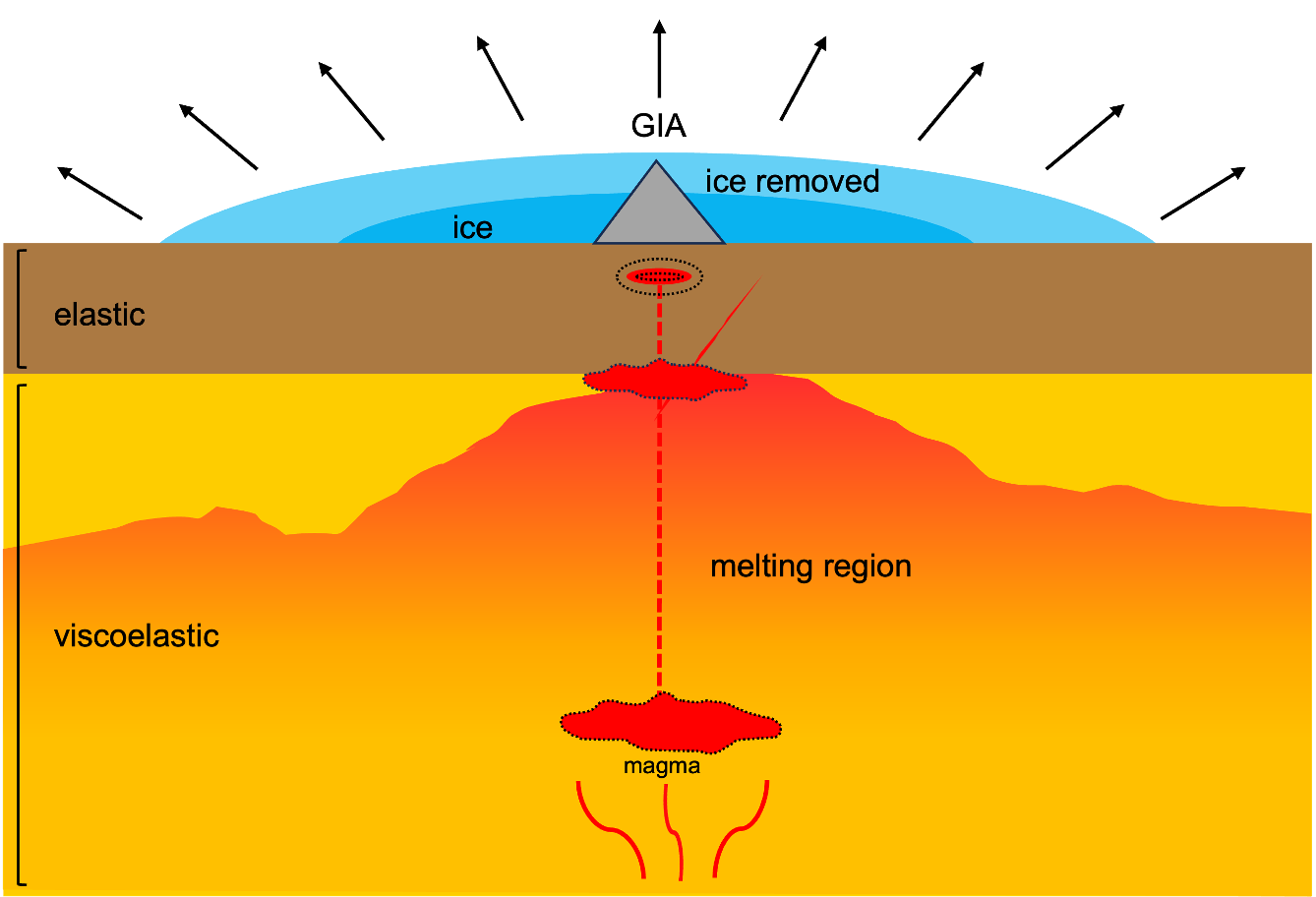
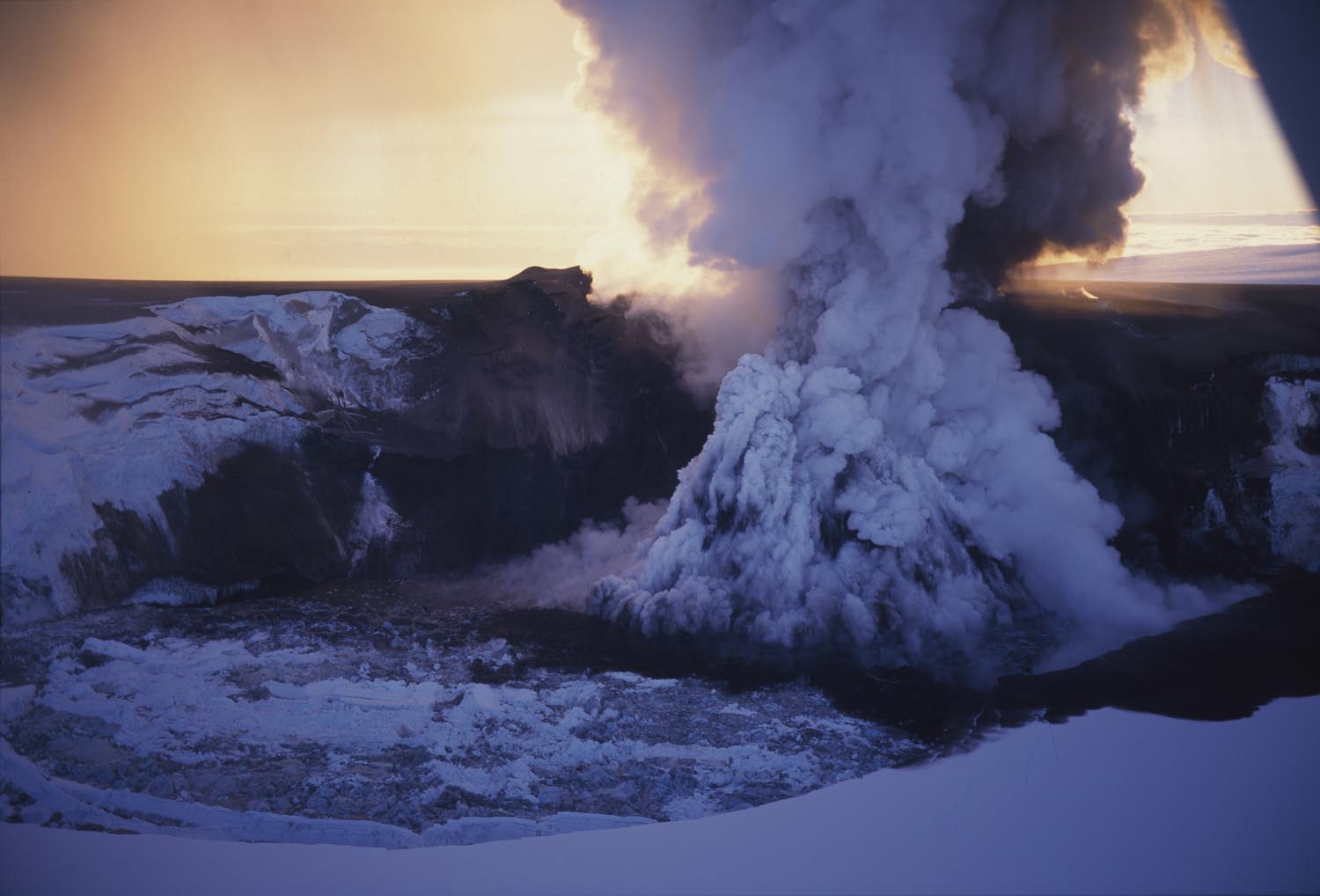
Our project focuses on understanding how climate-driven glacier retreat may potentially influence volcanic activity within Iceland. By combining Glacial Isostatic Adjustment (GIA) models with volcano plumbing models, the project will investigate how eruption likelihood may be modified as a result of the ice retreat.
ISVOLC activities:
- Developing advanced 3D models of magma plumbing beneath key volcanoes, considering magma bodies and magma mush within a magma domain, and episodic melt supply rate.
- Combining the GIA model predictions and the magma plumbing models to produce 3D models that describe effects from both deglaciation and magma influx.
- Using future scenarios of glacial mass loss for Vatnajökull to generate future GIA models.
- Determining the effect of both recent and future scenarios of glacier changes on magma generation and supply to, and stability of magma bodies beneath volcanoes.
- Determining the effect of both recent and future scenarios of glacier mass changes on seismic triggering of faults located within two major fault zones in Iceland.

 ISVOLC - Effects of climate change induced Ice retreat on Seismic and Volcanic activity